
7 Shoreline Erosion Warning Signs on Northern Michigan Lakefronts
From washed-out footings to sagging patios—what lakefront owners in Traverse City should watch for each season.
Why erosion accelerates here
Northern Michigan lakefronts see a brutal combination: freeze-thaw cycles that heave soil, spring runoff that undercuts banks, and summer wave action that strips sand from beaches on Torch Lake, Elk Lake, Long Lake, and Grand Traverse Bay.
On our shoreline restoration projects, the homeowners who call early almost always noticed subtle changes for two or three seasons first. The ones who wait often face compromised pathways, lost entertaining space, and repair bills that dwarf the cost of stabilization done right the first time.
Foundation and soil movement
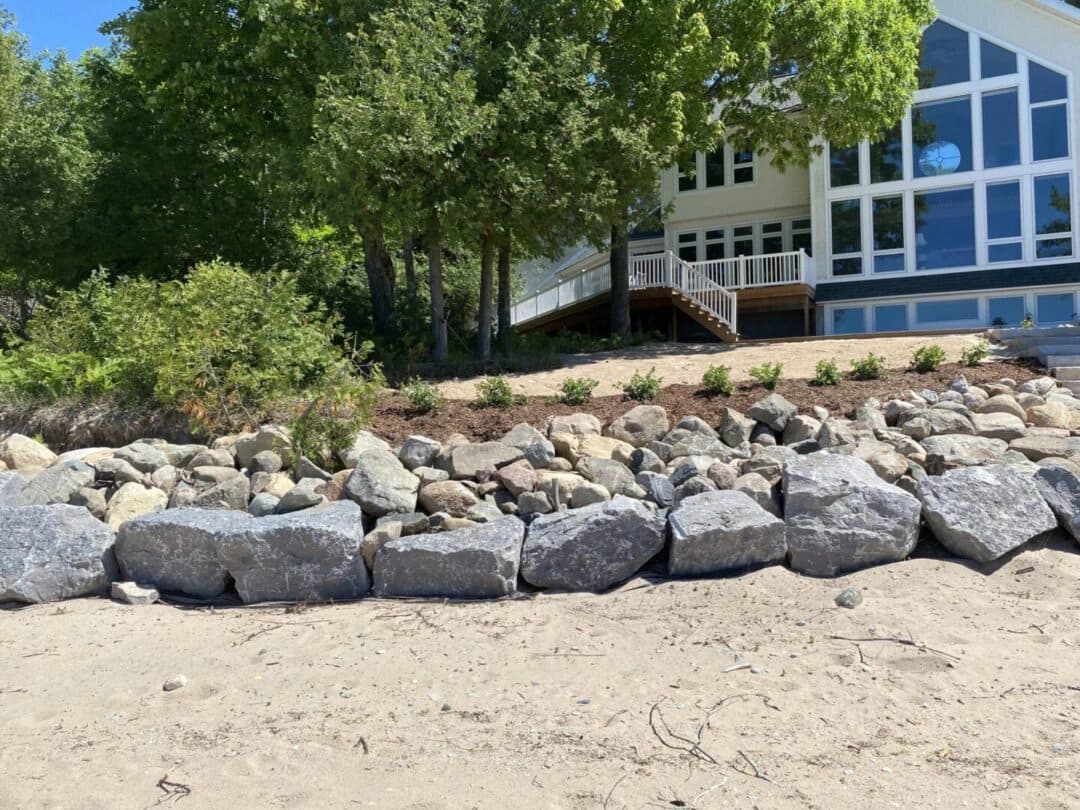
The constant impact of wind and water can gradually wash away soil that supports your home. Without stable bank material, structures may shift, crack, or develop new seepage in the basement—especially on steep lots like the hillsides we terrace with boulder retaining walls on lakefront properties.
If you see fresh cracks in the foundation, new pooling against the house after storms, or soil subsidence near the water line, treat it as urgent. Grading and drainage corrections upstream often pair with seawall or boulder reinforcement at the shore.
Disappearing beach and land
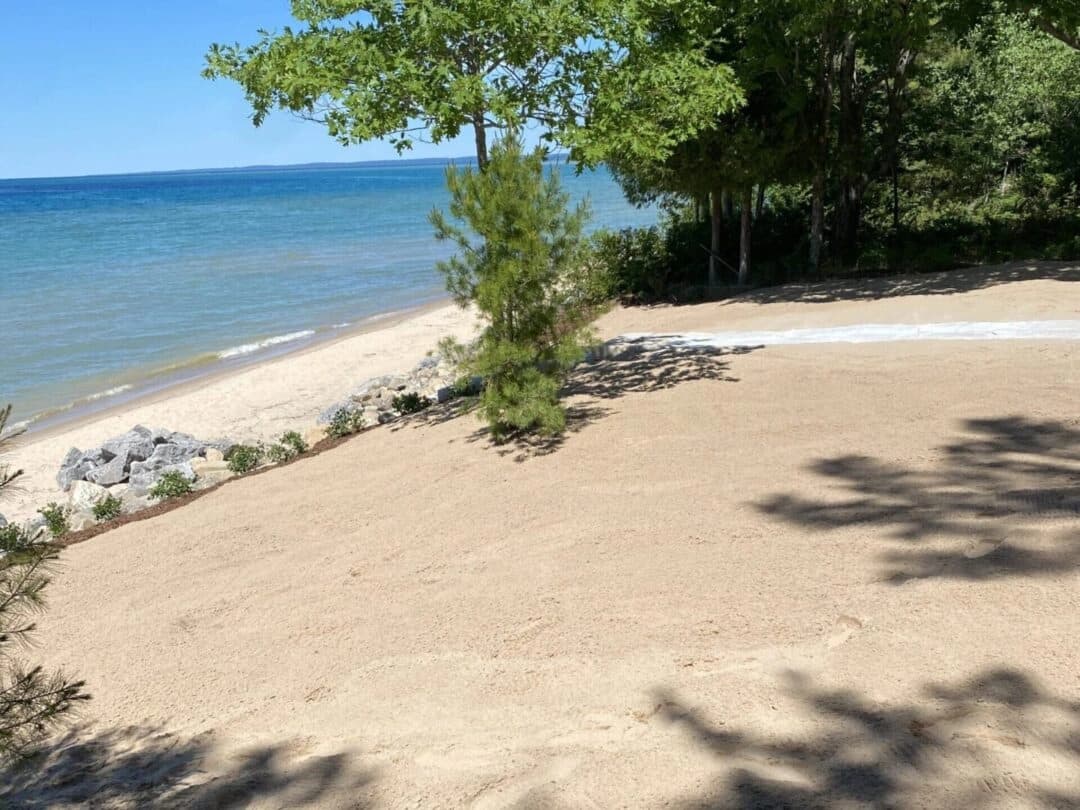
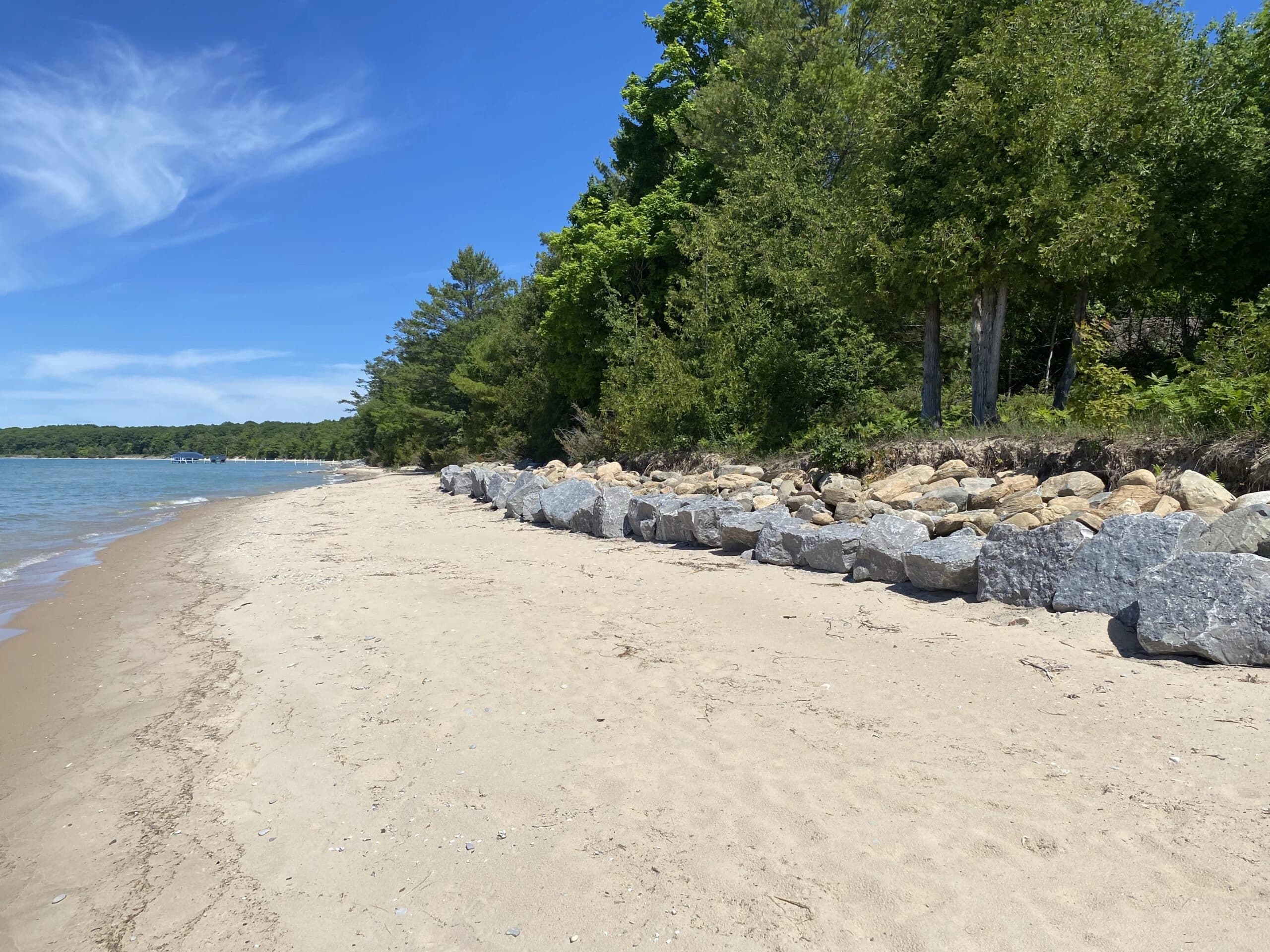
Rising water levels and wave action steadily claim usable yard. You might measure it in lost feet of sand each year, or in trees that used to sit well back from the water now leaning over the bank.
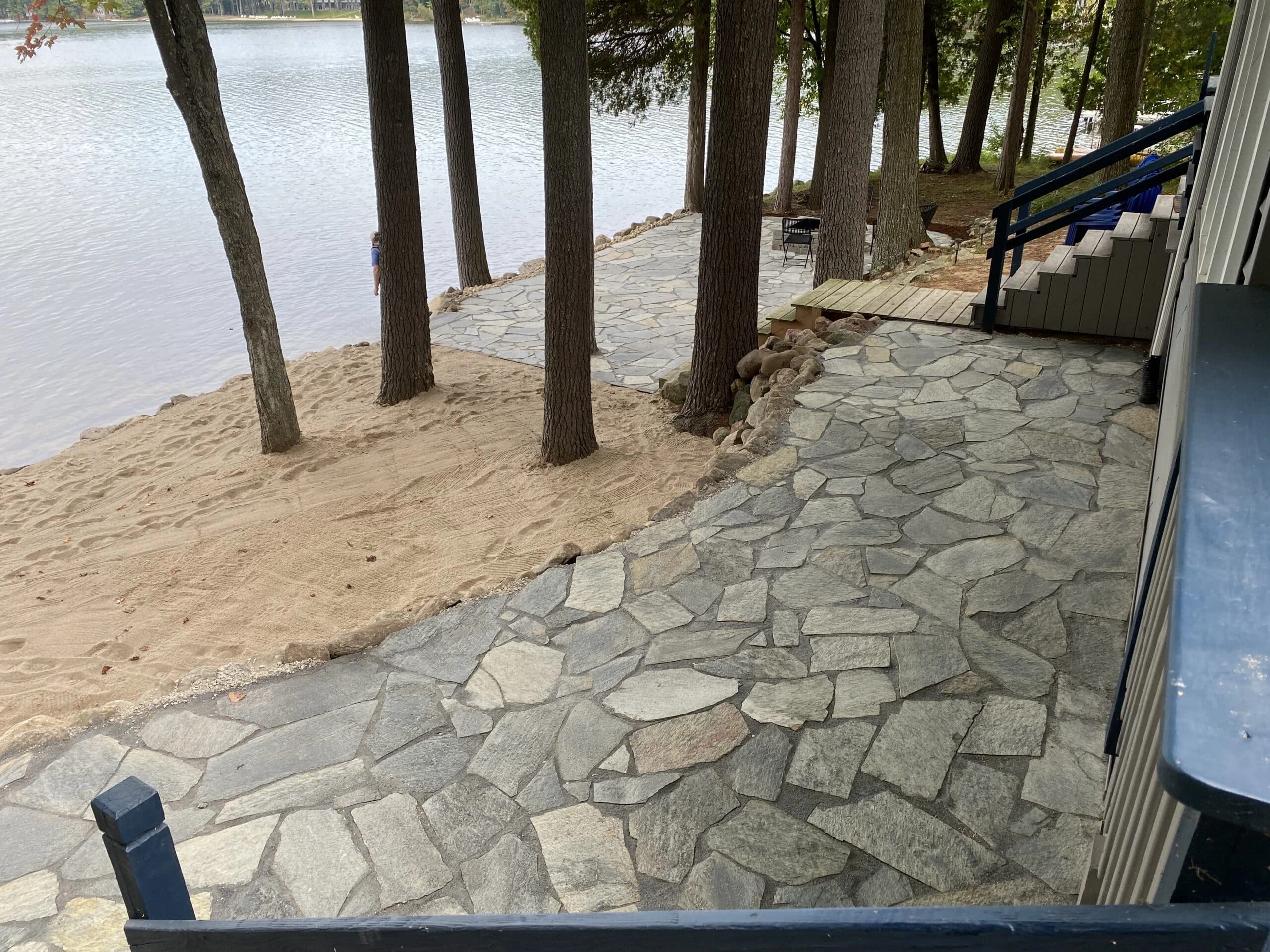
Beach sanding and erosion control on inland lakes works best when you backfill and grade after stabilization—not before. We integrate boulder or block structures where needed, then restore access steps and gathering areas, similar to our Spider Lake flagstone patio and beach restoration.
Walkways, patios, and decks
Erosion beneath hardscape shows up as uneven pavers, tilting steps, or gaps opening between a patio and the retaining wall behind it. Without proper erosion control, outdoor living investments weaken long before they look worn.
Terraced hardscape above the shore—paver landings, flagstone paths, timber-frame connections between house and cabin—needs solid mass on the slope. When landings shift, it is often a bank problem, not a paver problem.
What to do next
Document the site with photos each spring and fall. Note where ice push piled debris, where the beach profile changed, and whether storm drains or roof runoff dump directly at the bank.
A site visit from a crew that does both shoreline restoration and hardscaping can sequence work so you are not paying twice—once for an emergency fix and again for the patio you always wanted. Explore our shoreline restoration services or browse lakefront projects for examples across the region.
Plan Your Project
Inspired by this build? Tell us about your property—we'll discuss scope and timing.