
Boulder vs. Segmental Retaining Walls: What Works on Michigan Slopes
When mass and shoreline character matter—and when engineered block is the smarter choice for steps and landings.
The real decision is load and aesthetic
Homeowners often ask for a boulder wall or a block wall as if they are interchangeable. On aggressive lakefront grades in Traverse City and Leelanau County, we usually specify both: boulders for mass, shoreline character, and bench features; segmental block for predictable stair runs, paver landings, and engineered height.
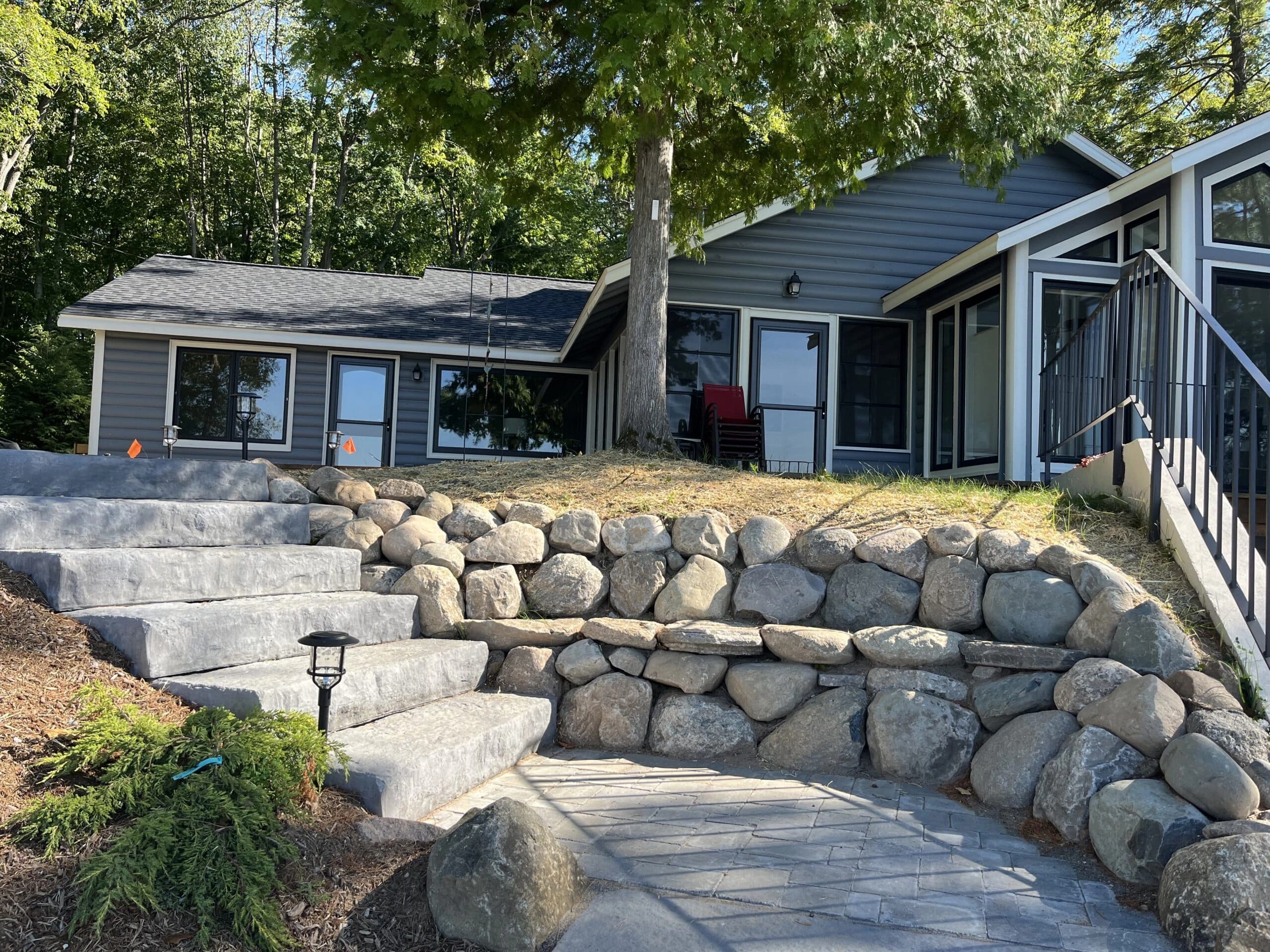
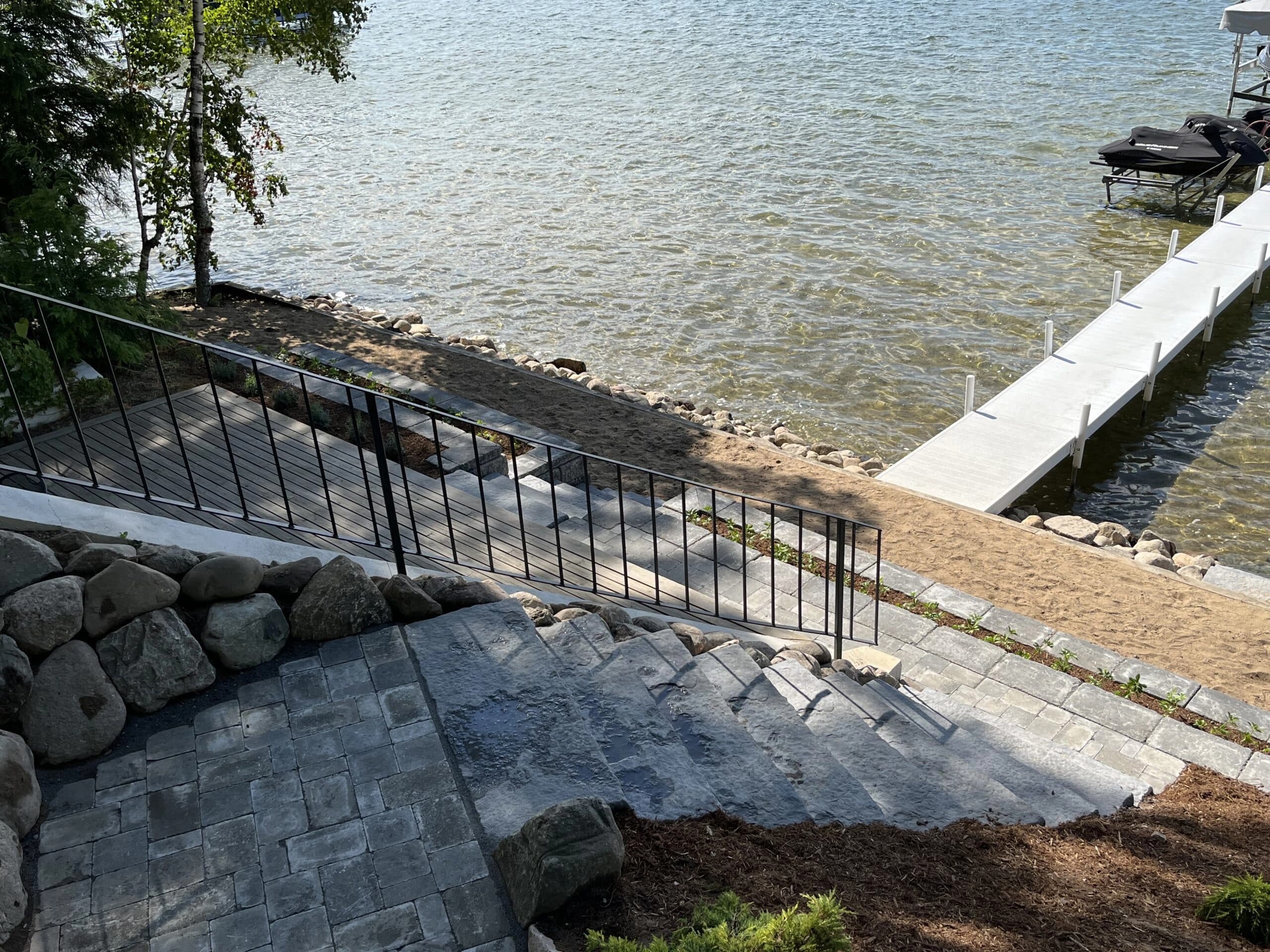
Our Dave Porath project is the textbook hybrid—natural boulder retaining walls paired with wall blocks around steps to the upper deck, plus paver landings for entertaining zones overlooking the water.
When boulders win
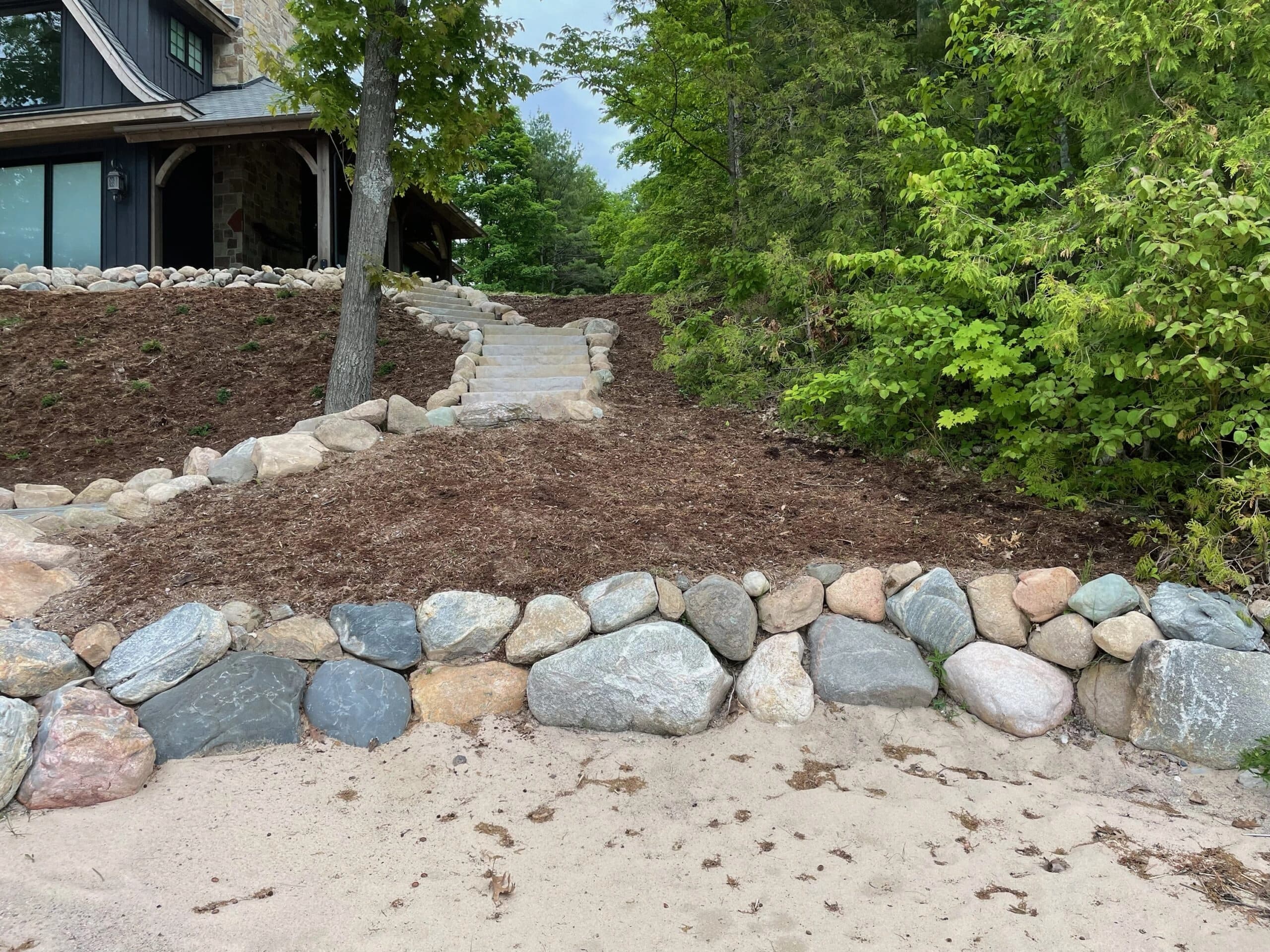
Boulder retaining wall installation carries serious soil load on steep hillsides while keeping a natural aesthetic that reads as Northern Michigan shoreline—not a catalog suburban wall. They excel at lake access, wave-zone reinforcement tied to seawall work, and one-of-a-kind details like the boulder bench seat overlooking Grand Traverse Bay on that same project.
Joanne Cole's limestone seawall and upper bank work show how stone mass at the water line sets the tone for everything above it. Nate Boggs's upper beach area uses natural boulders as a gathering terrace before flagstone stairs descend to the water.
When segmental block wins
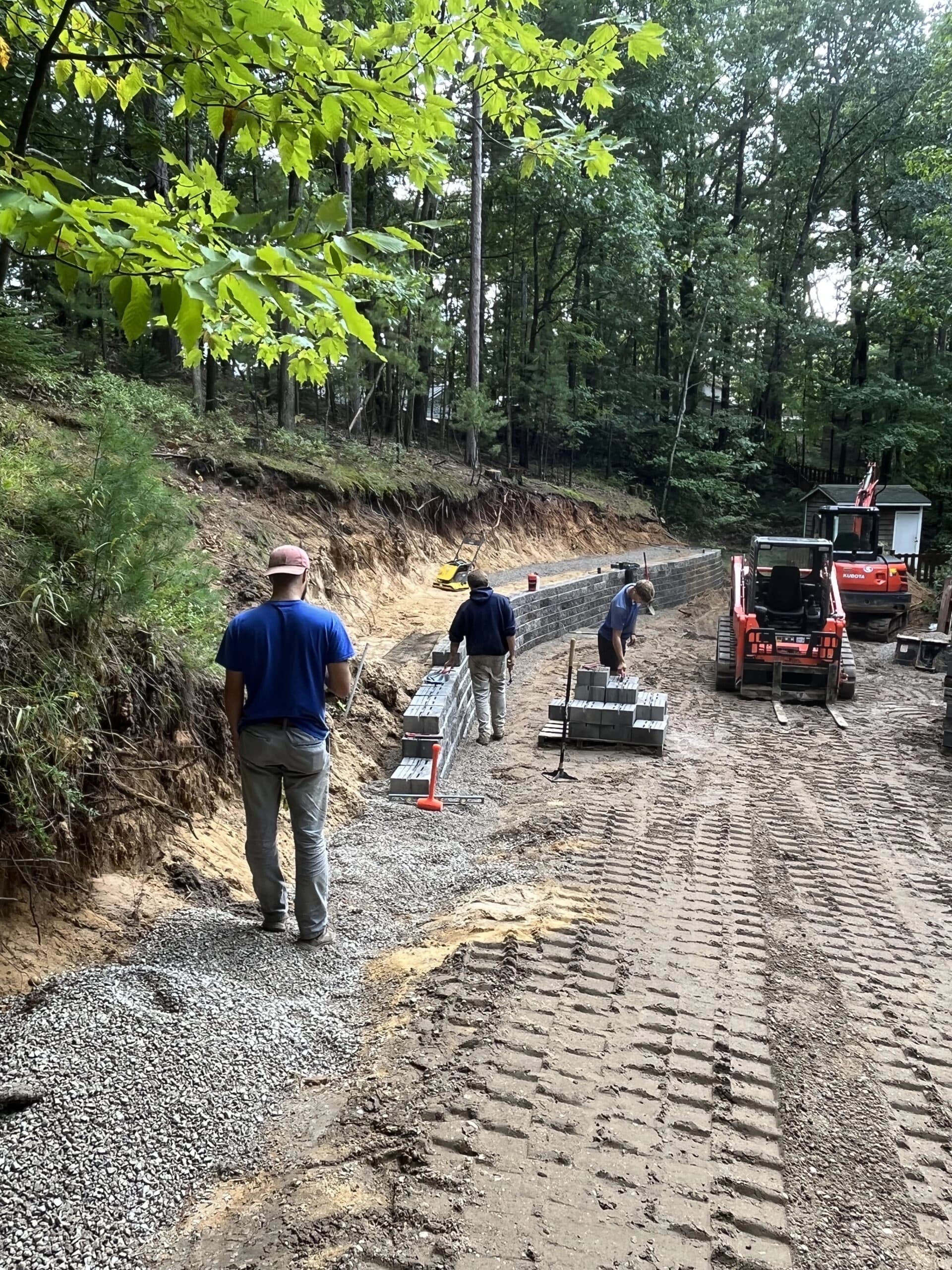
Versa-Lok and similar systems give repeatable lift heights for steps, curved walls, and connections between structures. Jean Desai's lakefront cottage design used Versa-Lok retaining wall blocks with high-format steps along a timber-frame path—the backbone linking main house, guest cabin, and fire pit patio without fighting every stone's unique shape.
Lisa Johnson's multi-terraced retaining wall along her driveway needed consistent lift and clean transitions into a single wall at pavement grade. Block excels where parking, drainage, and planting depth must be predictable.
Freeze-thaw and maintenance
Michigan winters punish any wall with poor drainage behind it. We backfill with free-draining aggregate, use geogrid where engineering demands, and tie wall caps and steps into the overall runoff plan—especially when the wall sits below a roof valley or driveway crown.
Boulders may settle slightly and still look intentional; block systems need correct base prep and compaction—the same discipline we use on gravel driveways before stone edging and plantings go in.
Plan Your Project
Inspired by this build? Tell us about your property—we'll discuss scope and timing.